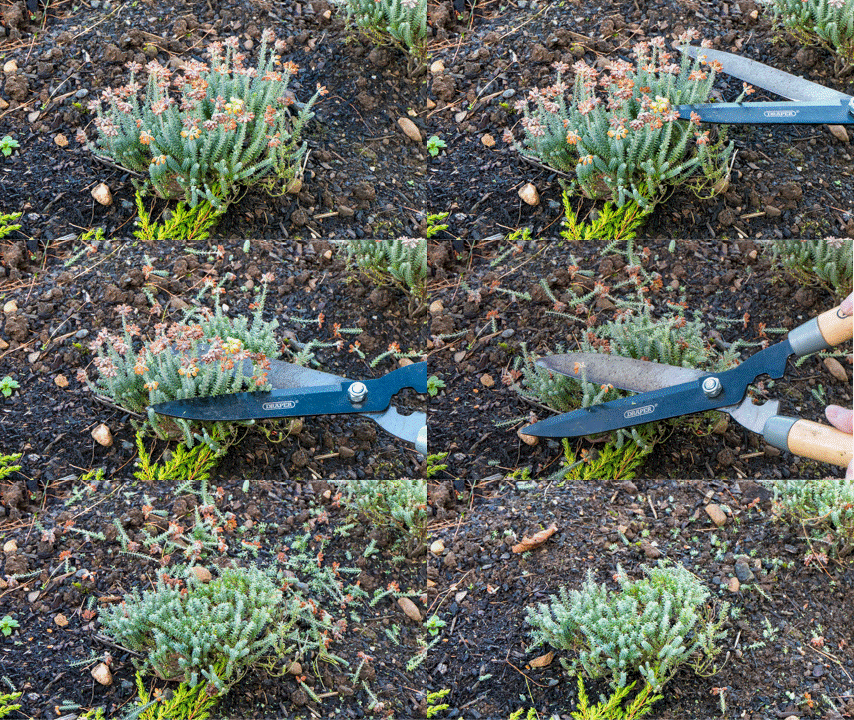
This new page offers hints and tips to help you garden better
Herbaceous burn out
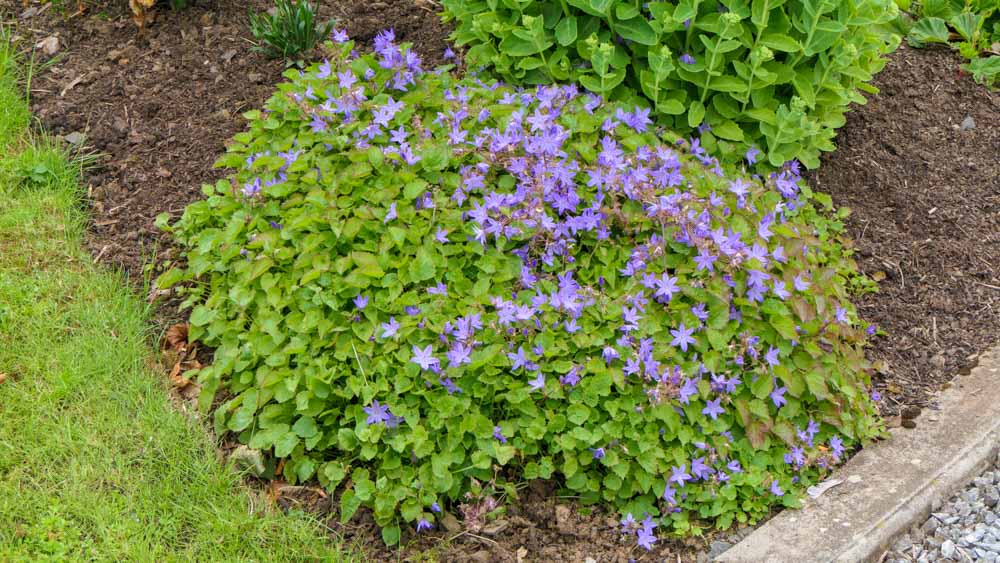
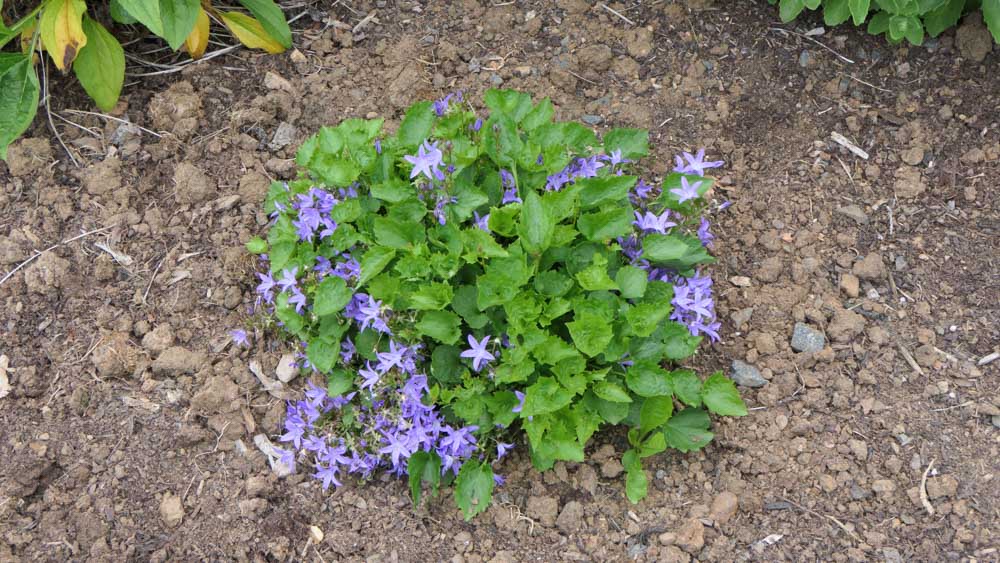
The left hand image shows Campanula poscharskyana growing in a border in the garden - it was probably planted 4-5 years ago and is suffering from old age. The centre of the plant is becoming hollow and less vigorous - that is the oldest part of the plant with all of the young new growth at the outside edge of the plant. This is quite common in some herbaceous and to rectify this you need to dig up the plant in late summer/early autumn cut off some of the fresh young outside growth with as much root and soil intact as possible, discard the the old plant freshen up the soil it was in by adding John Innes/multipurpose compost and some fertiliser and plant the young new plant where the old plant was. Picture 2 shows one I did last year and you can see the difference in vigour. Of course you can use this to increase the numbers of this particular plant in your garden - remember to water well.
Planting in wet areas
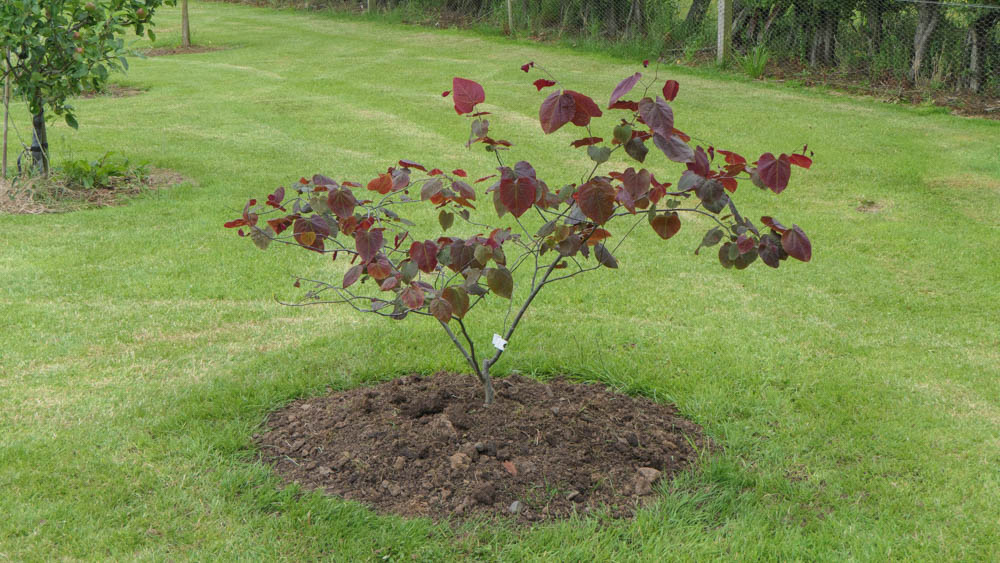
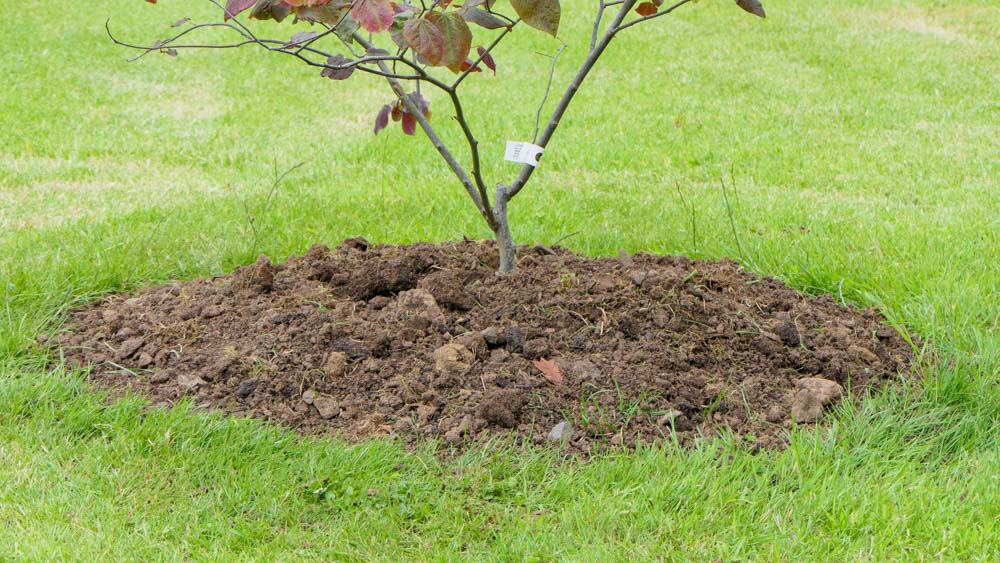
Our garden has very poor drainage with some areas slightly waterlogged - these have had to be drained using gravel and perforated drain pipe emptying into a field drain at the bottom of the garden whilst other areas are really just excessively wet. In these wet areas plants find it difficult to get established - roots - especially young fibrous roots don't like remaining excessively wet for any length of time and will eventually die due to lack of air. To combat this I now plant trees for example in slightly raised beds as shown in the above pics. Dig a hole take say a large bucket of a mix of 50-50 composted bark and multipurpose compost - add a little fertiliser - and mix this through the excavated soil. This does 2 things, it improves drainage overall and it means that when you plant the tree in the mound you have created the young roots will hopefully be above the water level in the excavated hole. As the tree matures it will usually become more tolerant of damp conditions or maybe will grow slightly shallow rooted keeping young roots away from the water in the bottom of the hole.
Pump placement in ponds
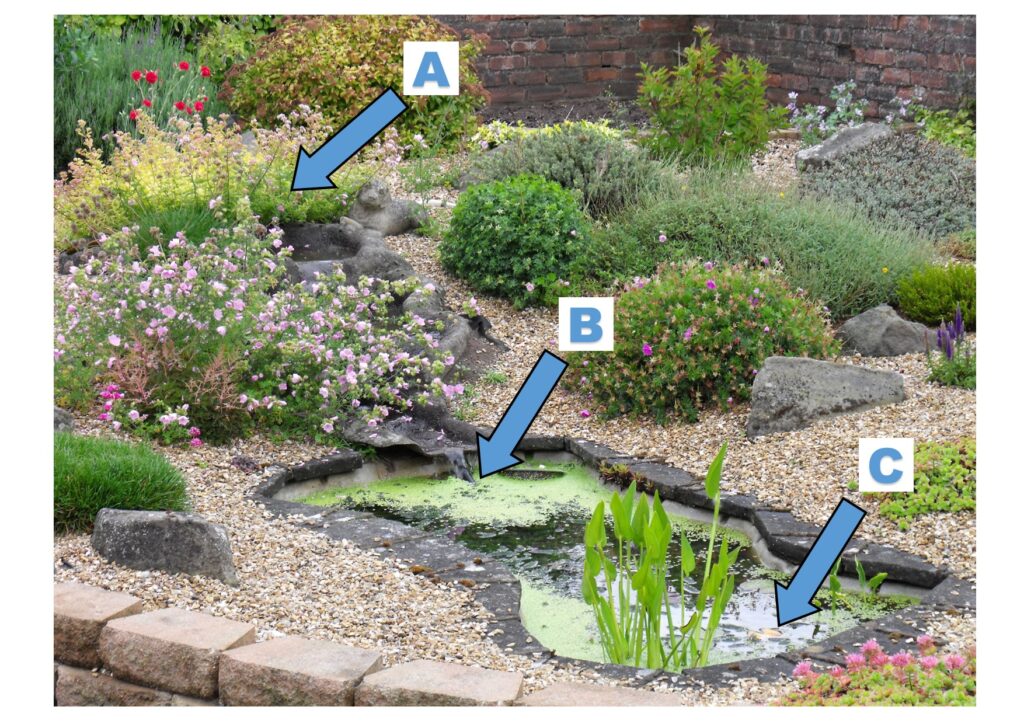
One of the many questions we used to get asked in the garden centre I worked in was - where do I place the pump in my pond? The pipe from the pump outlet is at arrow A and that could go straight into the waterfall or in many cases into a filter system hidden at the top of the waterfall with the outlet from the filter emptying into the top tier of the waterfall and eventually running into the pond from the bottom tier of the waterfall at arrow B. Many customers used to think that as pipe was expensive the shorter the run the better however that would mean that the pump would be sited under the waterfall drawing in mainly clean filtered water - wrong !!!!! The ideal place would be at arrow C, the other side of the pond as this would mean that the pump would be drawing in dirty water which would then be filtered and re-enter the pond at arrow B. This circulation of water meant that all of the pond water would over a period of time be filtered. If you have a T piece on your pump with a fountain jet on top then you may have little choice other than to place your pump in the centre of the pond and connect the side outlet from the pump to a pipe which runs to the top of the waterfall. Only ever buy semi -rigid pipe with reinforcing ribs otherwise the pipe will eventually collapse and if you have buried it under the waterfall you will have to lift the waterfall to replace it at some point. Do it once and do it correctly!
reversion - found on some variegated, gold/yellow leaved plants
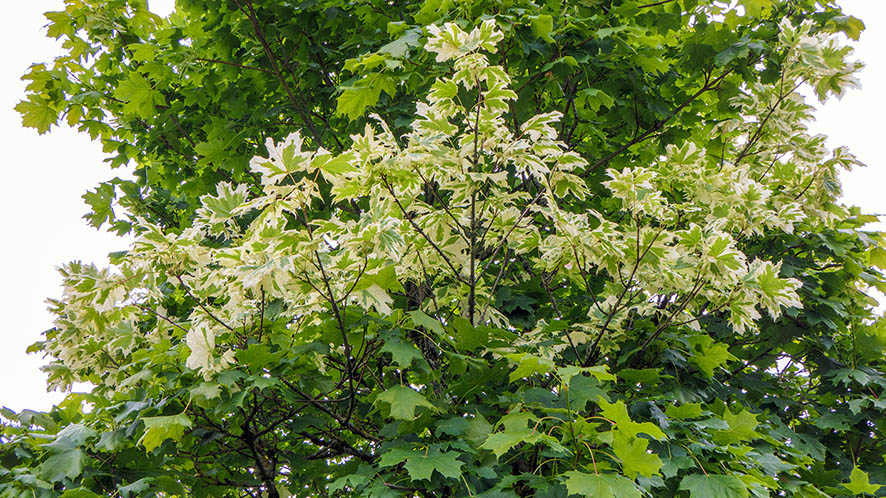
This is an Acer Drummondii I took a picture of a couple of years ago - one of six in a row beside a main road. What's gone wrong? The tree should have light green leaves with a white margin and yet most of this tree has plain green foliage. This problem is called reversion and it is when a plant reverts back to its true original form which was, plain green. It is a genetic malfunction not a disease so is incurable. All you can do is remove the reverted branches back to a main branch or trunk which is carrying variegated/yellow.gold foliage. The plant will probably try and revert on a different branch so you just need to be persistent and keep doing it. Only some varieties are prone to reversion so other varieties of variegated Acers are completely stable during their lifetime. Some variegated Euonymus varieties and golden privet are also particularly prone to reversion.
Liquid feeding large areas
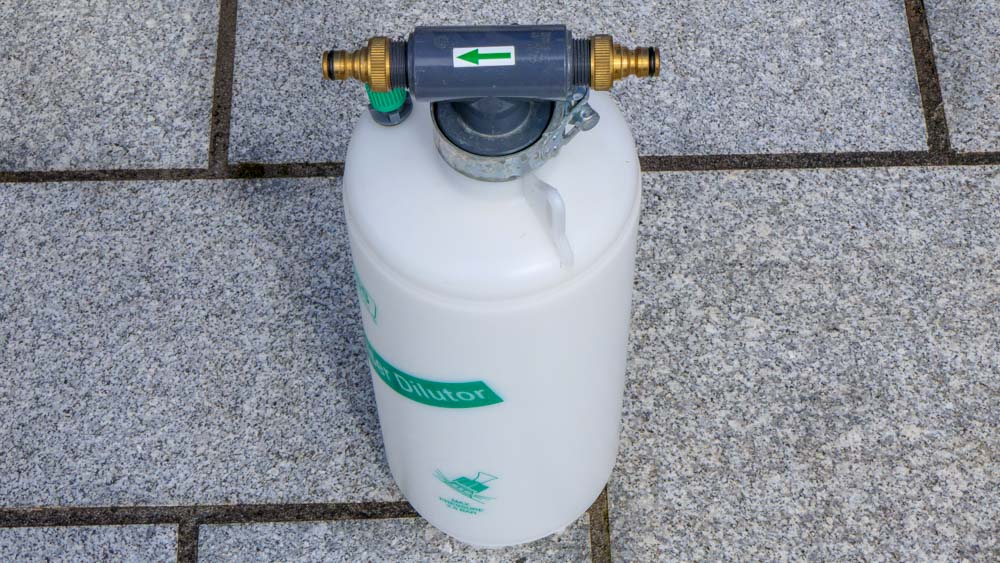
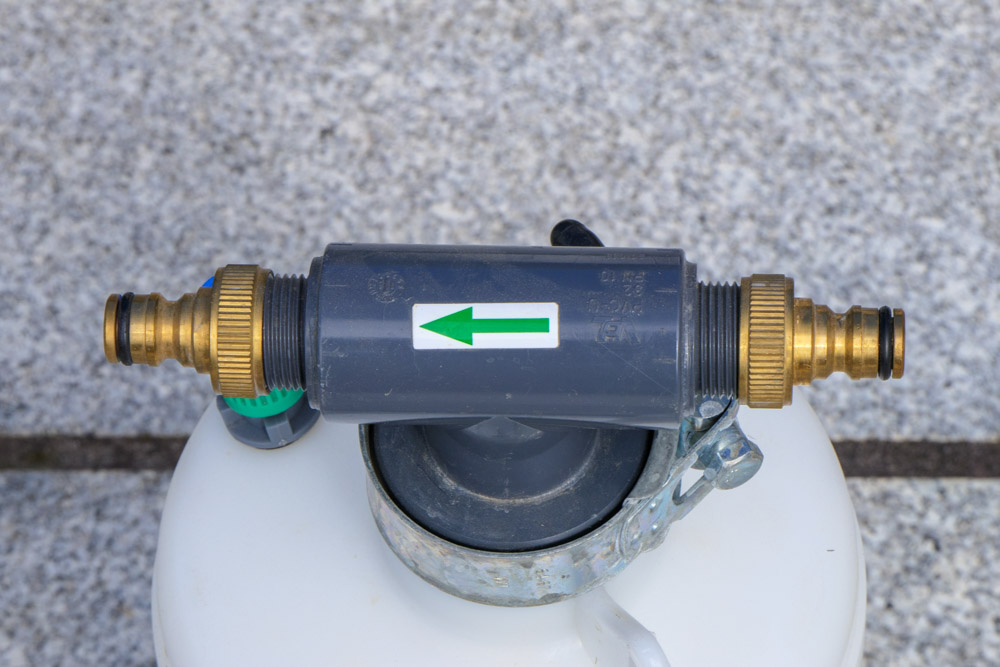
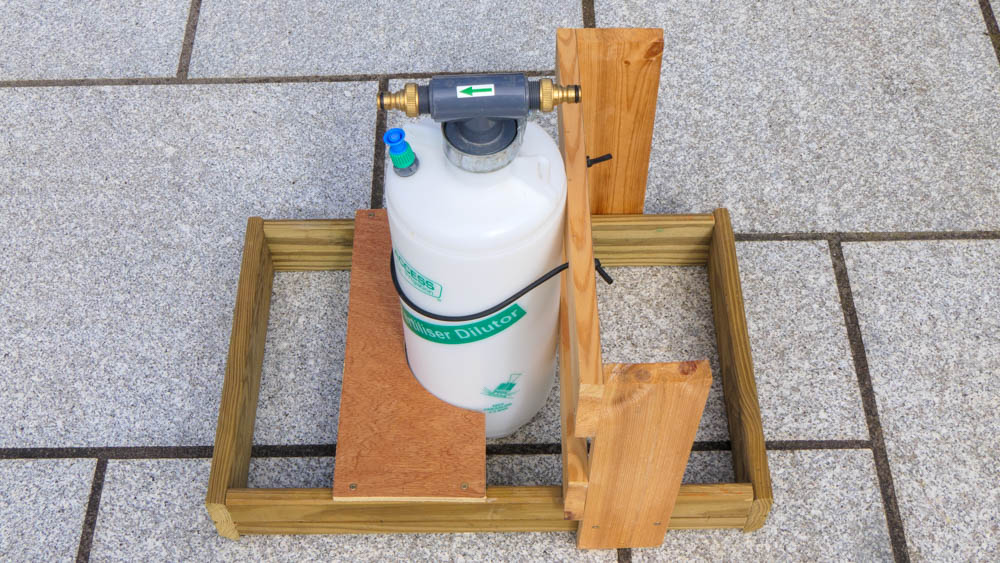
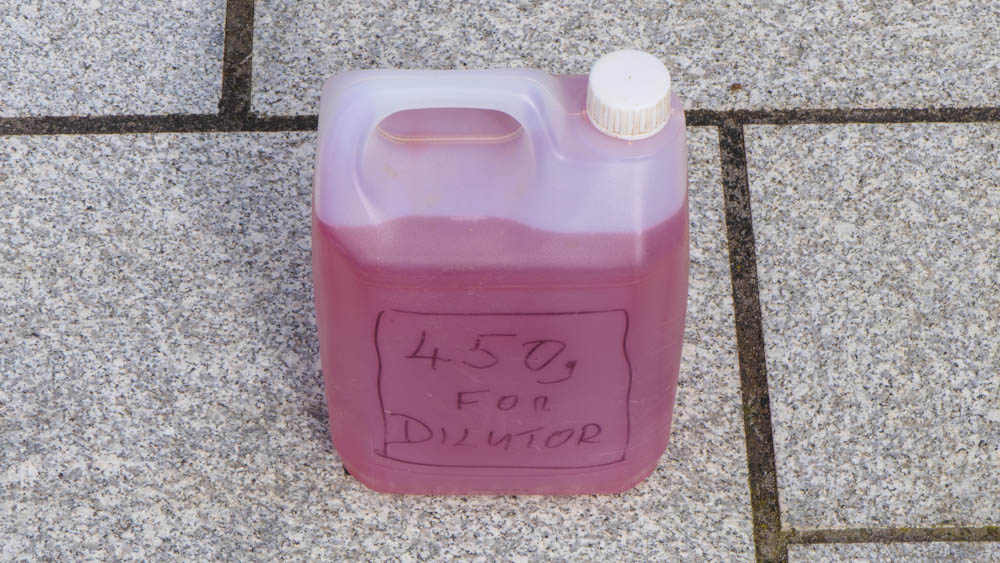

We have a fairly large garden which makes feeding it with liquid fertiliser a bit of a challenge. So, I came up with this solution. I remembered from my Garden Centre days a company which made irrigation equipment so I looked them up to find that they made a semi-professional diluter which would suit my size of garden. The only problem I had was that it had to remain upright to work properly hence the home made stand which it sits in. The feriliser type was the same as that used by the garden centre and this one was called Violet which had a nice balance of nutrients as you can see from the bottom left pic.. Different ones give you a different balance of nutrients to suit different types of plants - evergreen shrubs, bedding etc. It's simply a case of looking up the recommended dilution rates, choosing the correct suction nozzle ( the kit contains different nozzles which take up the solution at different rates - I use a 1:50 nozzle ) mixing up the solution to the correct strength adding it to the diluter connecting the inlet and outlet hoses turn on the tap and off you go! I tend to connect the outlet hose to a garden sprinkler and leave it on for 20 to 30 minutes in an area then move it. You could however use a watering gun and feed individual plants.
Pruning Heathers